

TMJ/Bruxism Treatment
Do you wake up with headaches or neck or shoulder pain? Are your teeth sensitive? Are they starting to crack or look worn down?
You may have problems with your TMJ (temporomandibular joint) or bruxism (teeth grinding or clenching). TMJ disorders (TMD) affect over ten million Americans and are more common in women. These disorders can be painful and, in some cases, seriously affect your quality of life.
Often, TMJ disorders prevent patients from opening their mouths fully, making dental exams and oral hygiene difficult. Such severe symptoms put your oral health at risk.
Symptoms of TMJ Disorders
 While TMJ symptoms can vary dramatically from person to person, some of them include:
- Pain in your jaw joints
- Facial, neck, or shoulder pain
- Headaches or migraines
- Grinding and clenching your teeth
- Tooth sensitivity
- Tinnitus
- Worn or shortened teeth
What Causes TMJ Disorders?
Jaw problems can also be caused by accidents, trauma, or sports injuries. But in many cases, there is no definite cause.
How your teeth come together (occlusion) also plays a role in TMJ and may cause dysfunction in your jaw joints. Because more women are diagnosed with TMJ disorders, scientists are investigating a link between TMJ disorders and female hormones.
How Are TMJ Disorders Treated?
The treatment for TMD depends on the type and severity of the symptoms. It can include splint therapy, surgery, neuromuscular treatments, deprogrammers, or muscle relaxers.
Most cases of TMJ can be treated without surgery, though it may be necessary for severe cases.
Bruxism (Tooth Grinding and Clenching)
Bruxism is excessive clenching or grinding of teeth. While it is very common, its symptoms can be severe, including tooth sensitivity, worn teeth, and headaches.
Clenching and grinding occur more commonly during sleep but can also occur during the day. Treatment for bruxism usually involves creating a nightguard or splint to protect your teeth from damage.
If you suffer from symptoms of TMJ disorders or bruxism, call our office to schedule an evaluation. At that time, we will recommend the appropriate treatment to keep you comfortable and protect your teeth from damage.
Our Team
-

Dr. Alice Zeigler
Dentist
View MoreDr. Alice Zeigler received a Bachelor of Science in Biology from the Georgia Institute of Technology, and then attended dental school at the Medical College of Georgia. Following dental school, she received advanced training through a General Practice Residency in Asheville, North Carolina. Dr. Zeigler practiced dentistry in the Atlanta area for seven years before she and her husband relocated to Boise.
Dr. Zeigler was thrilled to join the North End Dental Team in 2014. She is an active member of the American Dental Association, the Idaho State Dental Association, …
TMJ/Bruxism Treatment Technology
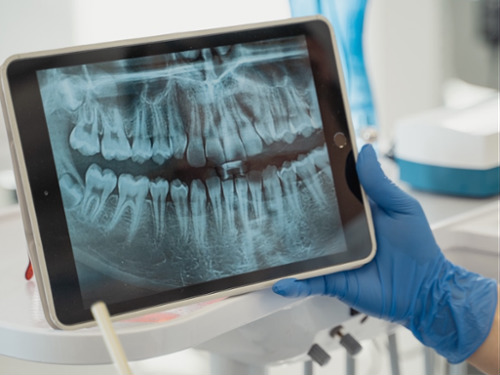
Panoramic X-Rays
Individual x-rays are beneficial for identifying decay, infection, and many other dental conditions. Having a full-picture view is often helpful, and that’s where panoramic x-rays come in handy.
Panoramic x-rays take a full-picture view of the teeth, bone, jaw joints, and other biological landmarks. These types of x-rays help us plan oral surgeries, such as extractions and dental implant placement, as well as identifying tumors, cysts, and jaw joint problems.